Home · Official wording
Official wording, kept unblended
This site does not invent a national count of ploughs. The official sentences below are museum wording, and they are kept in their own records.
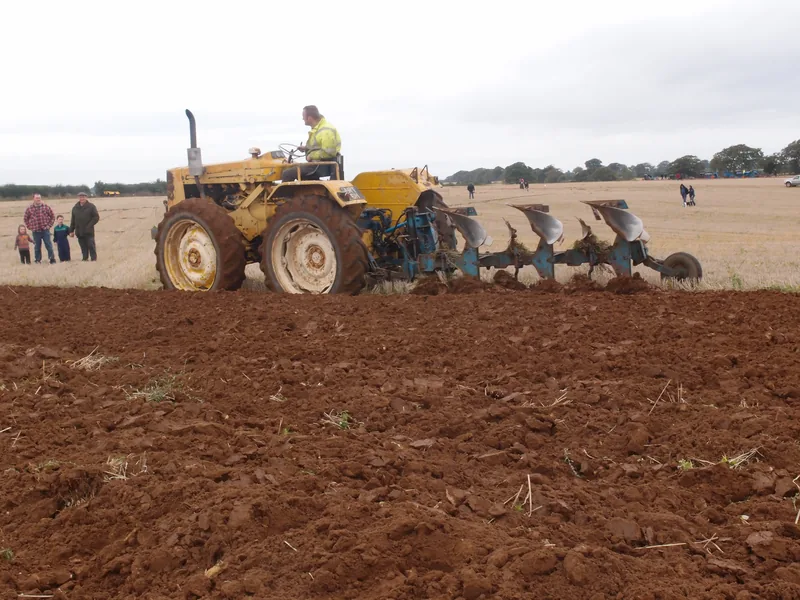
From the 51 Voices essay
On the mouldboard: “The most significant technological advancement in ploughing during this period was the addition of a mouldboard, which represented a major improvement on the more ancient ard.” And: “These cumbersome types of plough turned the soil and buried the weeds and were drawn by domesticated animals such as oxen.” [source]
On the Rotherham swing plough: it “was more refined and efficient, taking less power and effort for the horse to pull it through the field. These factory-produced wooden machines were the starting point for mass-produced metal ploughs, drawn by horses.” [source]
On later design: those later designs “led ultimately to the culmination of plough design in the tractor-drawn, multiple-furrow ploughs of today. Today, of course, there is much debate about the mixed benefits of ploughing and there is a move towards minimal tillage systems.” [source]
From the tractor-plough label
“By this time, internal combustion engines had become the dominant force in British ploughing. The mass-produced Fordson tractor was more compact and efficient than steam ploughing equipment, and faster than horse ploughing. It was also cheaper than either of these options.” [source]
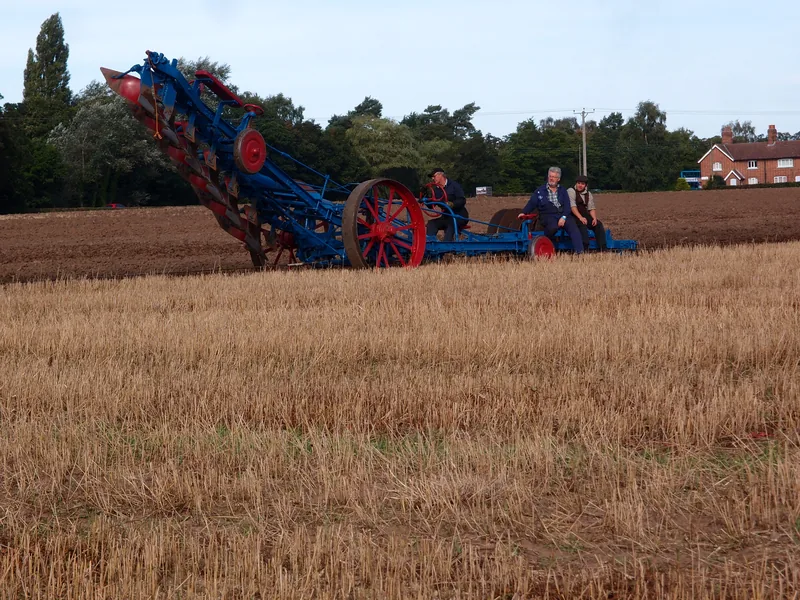
The photograph above is of a balance plough at the 2016 World Ploughing Championships. It is included as a clear picture of steam ploughing equipment, kept distinct from the horse and tractor photographs, and is not a picture of object 79/68.
Enjoyed the furrow?
No pop-ups. No intrusive advertising. Just interesting stuff. A little support helps the next farmyard site get built.