History
From a crooked foot to a tractor in a single pavilion
There is no single first day of the plough on this page, because the official museum record we can check does not begin there. What we do have is a set of scale models, made for the Festival of Britain in 1951, that tried to show how ploughing had changed — and a later age of steam engines, Fordsons, and championships still run with horses.
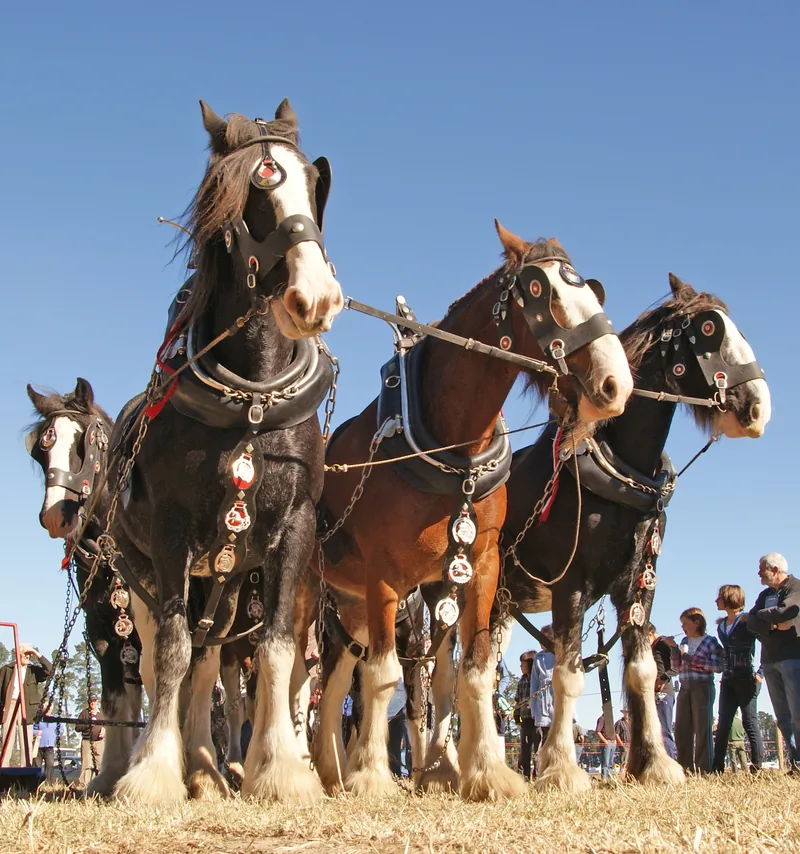
The most significant technological advance in ploughing, during the long medieval period, was the addition of a mouldboard, “which represented a major improvement on the more ancient ard.” Earlier, more cumbersome ploughs, Madeleine Ding writes, “turned the soil and buried the weeds and were drawn by domesticated animals such as oxen.” A later refined swing plough, with tapered share, coulter and mouldboard, reduced the draw weight and made a more efficient plough. Jonathan Brown, an honorary fellow of The MERL, has suggested that the Rotherham plough “may be considered the pinnacle of plough design before industrialisation.” [source]
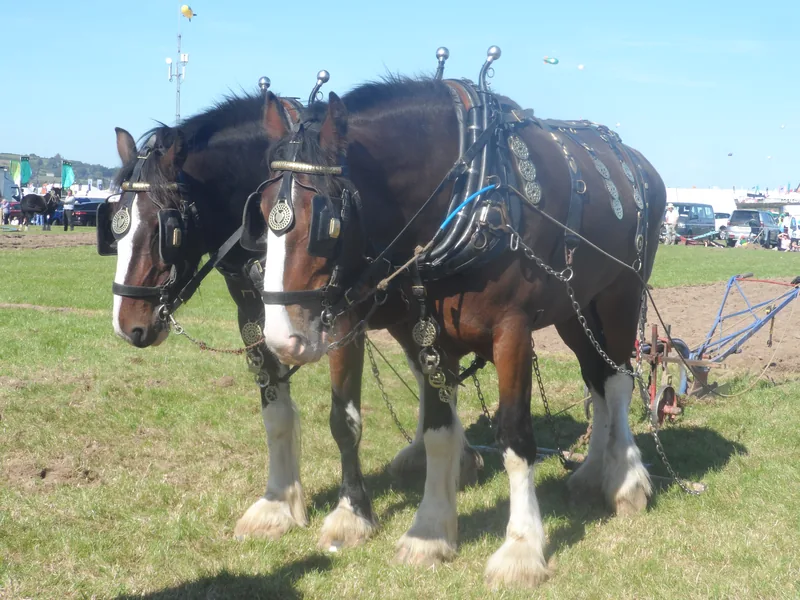
Not every field could take a drawn plough at all. The caschrom, or foot plough, takes its name from the Gaelic for “crooked foot.” It was wooden, “especially for use in rocky soils where ploughs could not go, or perhaps by people who could not afford a plough,” and was used mainly in the Scottish Highlands, with similar tools also found in Ireland and Norway. The breast plough was something else again: a turf-lifting tool with a T-shaped bar that “pushed against the worker’s chest or thighs,” in common use until the early twentieth century for paring turf, levelling ground and clearing stubble. [source]
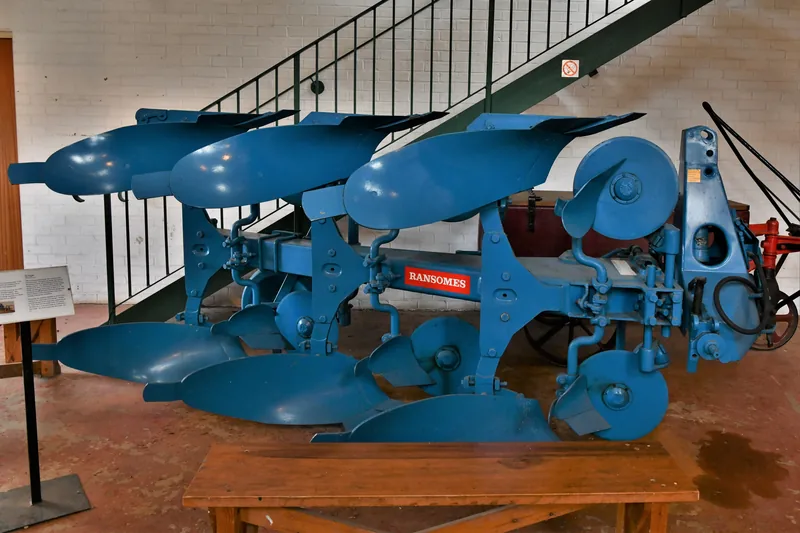
Those older forms were not only folklore by 1951. They were exhibits. The Festival of Britain’s Country Pavilion, on the upstream side of the South Bank site, told the story of British wildlife, farming, rural crafts and agricultural research, under the Festival themes of “Land” and “People.” A set of eight model ploughs stood there “alongside examples of modern tractor technology.” After the Festival the site was dismantled, and the newly formed Museum of English Rural Life acquired the models. [source] [source]
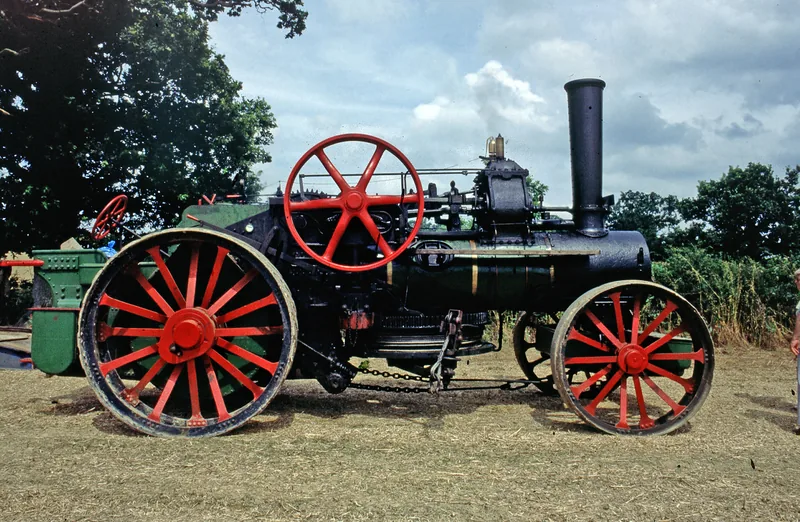
Steam had already had its own chapter. Two ploughing engines, one at each side of a field, would winch a plough to and fro on a cable, so the heavy engines themselves did not have to walk the wet soil. Then the mass-produced Fordson arrived, “more compact and efficient than steam ploughing equipment, and faster than horse ploughing,” and “cheaper than either of these options,” on “the same principle that the Ford Model T had used.” Horse ploughing, steam ploughing and tractor ploughing did not replace one another in a single year. They overlapped, and at Shillingford in 1956 they were still in the same showground. [source]
Keep exploring
Enjoyed the furrow?
No pop-ups. No intrusive advertising. Just interesting stuff. A little support helps the next farmyard site get built.