Implements
Three ploughs in the museum, and the people around them
The Museum of English Rural Life holds a Wiltshire horse plough, a Hornsby butterfly plough, and a Lister-Cockshutt tractor plough. Each object has an official history, and each history has a person, a place, or a surprise in it.
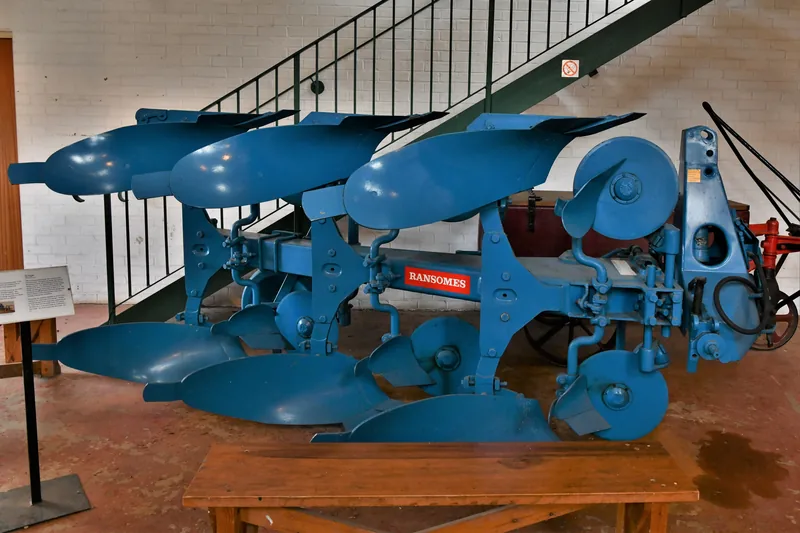
The Wiltshire horse plough, 52/102
Object 52/102 is a Wiltshire horse or swing plough, with a wooden mouldboard and an iron share. It was used in a live demonstration at the 1956 World Ploughing Championships in Shillingford by Nelson Tamblin, of West Tuelmenna Farm, Liskeard. The Museum’s exhibition there “was largely concerned with tractor ploughing.” Archive photograph 60/1475 records the demonstration. [source]
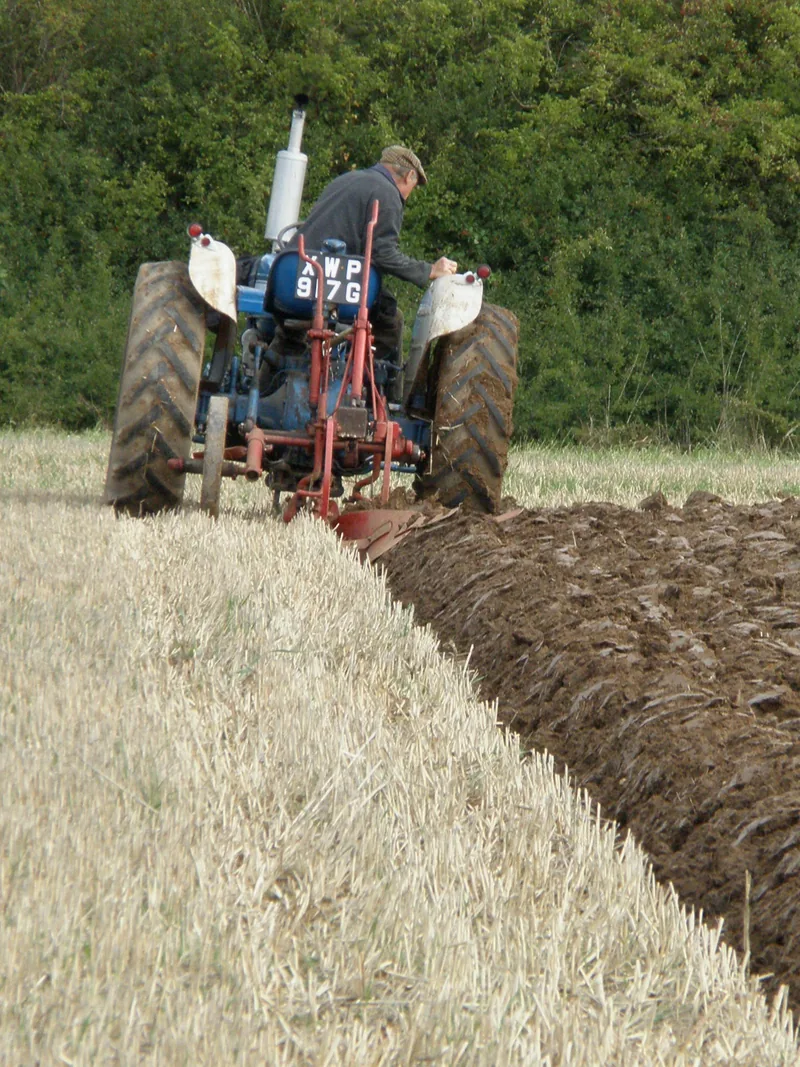
The Hornsby butterfly, 62/524
Object 62/524 is a one-way reversible, or “butterfly,” plough, made by Richard Hornsby & Sons Ltd of Grantham around 1900. Two mouldboards share a swivelling beam. At the end of the furrow a catch is released and the beam turns over. The firm began as Seaman and Hornsby in 1815, and by the end of the nineteenth century had 1,500 employees on a 17-acre site at Spittlegate Ironworks. [source]
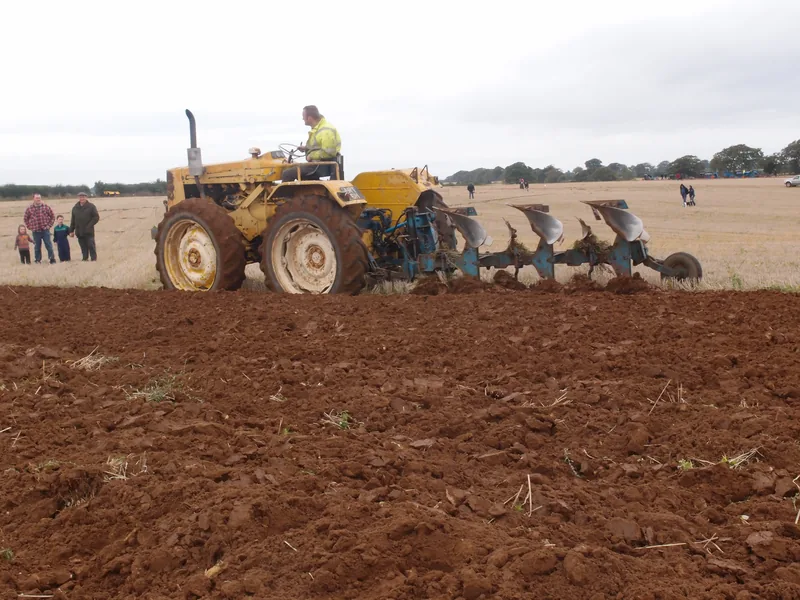
The Lister-Cockshutt No. 6, 79/68
Object 79/68 is a two-furrow tractor plough, made in 1936 at Brantford, Ontario, and imported by R. A. Lister & Co. of Dursley. Lister imported Cockshutt ploughs; Cockshutt imported Lister cream separators. This one, originally red, with disc coulters, semi-digging breasts and two spare “B” mouldboards, worked at Low Farm, Hemingfield, Barnsley, and was bought at the farm sale on 30 May 1979. The official label that travels with it is the Fordson paragraph: cheaper than steam, cheaper than horses, and built on the Model T idea that an everyday person should be able to afford one. [source]
Keep exploring
Enjoyed the furrow?
No pop-ups. No intrusive advertising. Just interesting stuff. A little support helps the next farmyard site get built.